
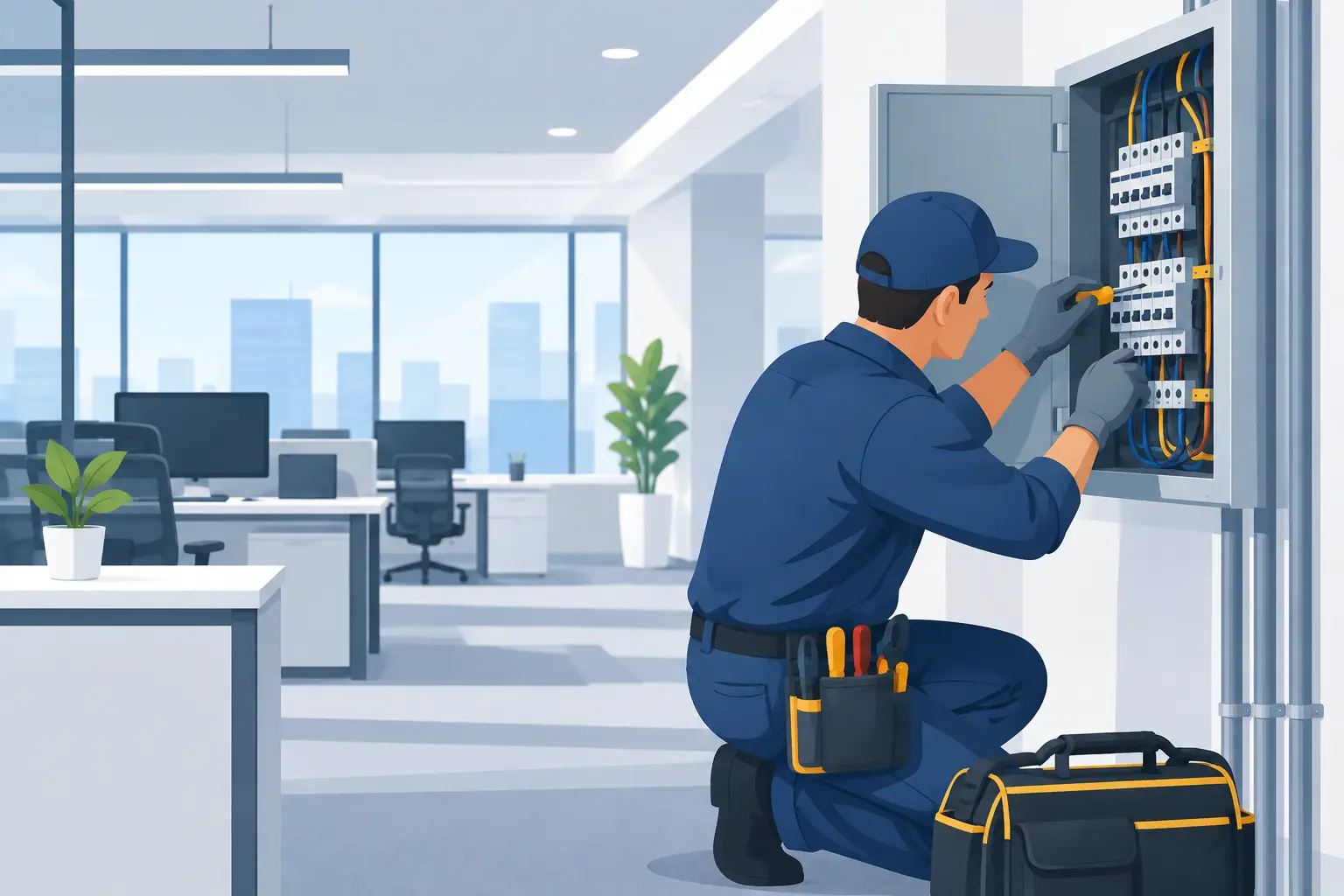
A flickering light, a repeatedly tripped breaker, or a warm outlet can feel like a minor office annoyance until it interrupts work, damages equipment, or creates a safety risk. Professional office electrical maintenance services give business owners, office managers, and property teams a practical way to find issues early, keep essential systems dependable, and avoid the cost and disruption of unexpected electrical failures.
For offices in Dubai, electrical reliability supports far more than lighting. Computers, network equipment, access-control systems, printers, pantry appliances, AC controls, and meeting-room technology all rely on a safe, properly maintained electrical installation. When one part of that system begins to fail, the impact can quickly spread across the workplace.
Why electrical maintenance belongs in every office plan
Most electrical faults do not begin with a complete outage. They often show up as smaller warning signs: circuit breakers that trip without an obvious reason, lights that dim when equipment starts, sockets that feel loose, or extension leads doing more work than they should. Leaving these issues for later can turn a straightforward repair into an urgent callout, lost working hours, or damage to valuable equipment.
Planned maintenance changes that pattern. Rather than waiting for a fault to stop operations, a qualified technician checks the condition and performance of the electrical system, identifies areas of concern, and carries out suitable repairs before they become more serious. This is especially useful in busy offices where shutting down a work area during peak hours is difficult.
It also helps businesses make informed decisions. Not every older component needs immediate replacement, and not every issue requires major electrical work. A proper inspection distinguishes between a simple repair, a capacity concern, and a system that needs upgrading to safely support the office’s current load.
What office electrical maintenance services should cover
The right scope depends on the size, age, layout, and daily use of the office. A compact unit with a few workstations has different needs from a multi-floor workplace with server rooms, meeting spaces, staff kitchens, and high-use equipment. Still, a thorough maintenance visit should focus on the parts of the electrical system that affect safety, continuity, and daily convenience.
Distribution boards and circuit protection
The distribution board is central to the office electrical system. Technicians inspect breakers, connections, labeling, signs of heat, and the overall condition of the board. A breaker that trips repeatedly should not simply be reset and ignored. It may indicate an overloaded circuit, a faulty appliance, damaged wiring, or an issue that needs further testing.
Clear circuit labeling matters too. During a fault or emergency, staff and maintenance teams need to know which breaker controls which area. Accurate labeling saves time, prevents unnecessary shutdowns, and makes future maintenance safer.
Sockets, switches, and office power points
Power outlets receive constant use in modern offices. Desks may support laptops, monitors, chargers, desk lamps, and docking stations, while shared spaces often add printers, screens, coffee machines, and cleaning equipment. Loose, cracked, discolored, or warm sockets require attention, as do switches that buzz, spark, or operate inconsistently.
Technicians can repair or replace damaged accessories and assess whether the current number and placement of power points still suit the office layout. If teams are relying heavily on extension leads and multi-plug adapters, the solution may be additional fixed outlets rather than another temporary connection.
Lighting and emergency lighting
Good lighting improves comfort, visibility, and the overall presentation of a workplace. Maintenance can include replacing failed fittings, checking switches and controls, resolving flickering lights, and identifying inefficient fixtures that may be worth upgrading.
Emergency lighting needs particular care. These fittings are designed to support safe movement during a power failure or emergency, so they should be checked regularly rather than assumed to be ready. A maintenance provider can test their operation and address batteries, fittings, or connections that no longer perform as required.
Wiring, load checks, and equipment connections
Electrical demand changes as an office grows. More staff, additional workstations, upgraded pantry equipment, new printers, or a redesigned meeting room can place extra pressure on circuits that were adequate when the office first opened. Load checks help identify where demand may be approaching or exceeding a circuit’s intended capacity.
This is also a sensible time to inspect visible wiring, cable containment, dedicated connections for equipment, and any signs of wear around high-use areas. Server rooms, reception desks, pantries, and print stations often deserve closer attention because their electrical demand is concentrated.
Warning signs that should not wait
Some electrical issues call for prompt assessment, even if the office can continue operating for the moment. Repeated tripping, burning smells, sparks, buzzing sounds, visible cable damage, electric shocks from appliances, or scorch marks around switches and sockets should be treated seriously.
Power loss affecting critical equipment is another reason to act quickly. A problem with network hardware, access systems, security equipment, or essential workstations can disrupt the entire office. The safest response is to isolate the affected equipment where possible and arrange for a qualified technician to investigate. Staff should not remove distribution-board covers or attempt repairs themselves.
There is a trade-off between urgent repair and planned work. Emergency support resolves an immediate problem, but it may involve disruption at an inconvenient time. Routine inspections allow repairs, replacements, and upgrades to be scheduled around office hours, making the process easier to manage and often more cost-effective.
How often should an office schedule maintenance?
There is no single interval that suits every workplace. The right schedule depends on occupancy, the age of the installation, the amount of equipment in use, previous fault history, and whether the office has areas with higher electrical demand. An office that frequently changes layouts or adds equipment may need more regular review than a stable, lightly used space.
As a practical approach, arrange a professional inspection at planned intervals and do not wait for that visit if warning signs appear. Office administrators can also support safe operations between visits by reporting faults early, keeping electrical panels accessible, and avoiding overloaded adapters or damaged leads.
For managed offices, electrical checks can be included within a broader maintenance plan. This creates one point of accountability for electrical repairs alongside AC, plumbing, cleaning, handyman work, and other building needs. It is particularly useful for property managers who want fewer vendors to coordinate and a clearer view of recurring maintenance concerns.
Choosing a dependable electrical maintenance partner
A suitable provider should begin by understanding the problem, the office layout, and the systems affected. The goal is not to recommend unnecessary work, but to explain what has been found, what needs immediate attention, and what can be planned for later. Clear communication matters when maintenance affects staff access, working hours, or essential equipment.
Look for qualified technicians who work carefully around occupied spaces and can handle both minor repairs and larger corrective work. Transparent pricing is equally valuable. Businesses should know what the service includes before work begins and be able to approve additional repairs when they are genuinely needed.
We Maintain Technical Services LLC supports Dubai offices with dependable electrical maintenance and a wider range of property services, helping businesses address faults without the inconvenience of coordinating several separate contractors. Whether the need is a single repair or an ongoing maintenance arrangement, the focus should remain on safe work, clear recommendations, and minimal disruption.
A well-maintained office electrical system rarely draws attention, and that is exactly the point. When lights, outlets, circuits, and essential equipment work as they should, your team can stay focused on the work that keeps the business moving.
Leave a Reply