
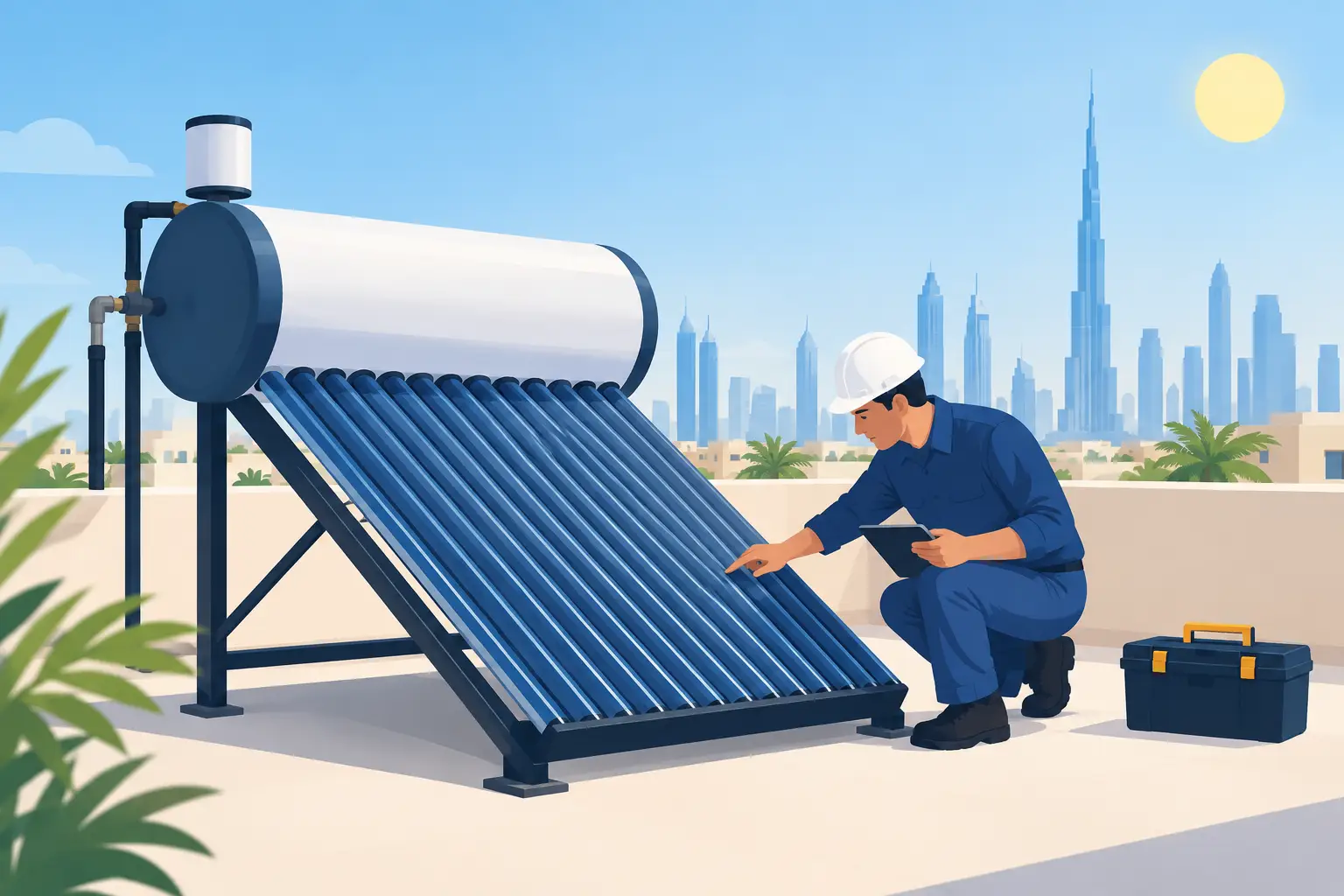
A cold shower on a Dubai morning rarely starts with a sudden failure. More often, the warning signs were already there: water taking longer to heat, a small drip near the tank, reduced pressure, or a backup heater running more often than it should. Timely solar water heater maintenance Dubai residents can rely on helps catch these issues before they interrupt daily routines or become a larger repair.
Solar water heaters are well suited to Dubai’s sunny climate, but constant heat, dust, mineral-heavy water, and rooftop exposure place real demands on the system. A well-maintained unit can provide dependable hot water for years. A neglected one may lose efficiency, leak, corrode, or develop pressure-related faults that are more expensive to resolve.
Why Solar Water Heaters Need Regular Attention
A solar water heater is not just a panel on the roof. It is a working system made up of solar collectors, a storage tank, connecting pipes, valves, insulation, fittings, and, in many properties, an electric backup element. Each component has a different job, and a fault in one area can affect the entire supply of hot water.
Dubai’s conditions make preventive care especially worthwhile. Fine dust can settle on collector surfaces and reduce solar absorption. High water temperatures can place stress on seals and valves. Minerals in the water can form scale inside the tank and pipes, restricting flow and reducing heating performance. Rooftop fittings also face intense sun exposure, which can gradually weaken insulation and exterior seals.
The right service schedule depends on the system’s age, water usage, tank size, and condition. A villa with a large family and multiple bathrooms generally puts more demand on the system than a lightly used apartment unit. As a practical rule, an annual professional inspection is sensible, while older units or systems with recurring issues may need more frequent attention.
7 Solar Water Heater Maintenance Checks That Matter
1. Inspect the collectors for dust, damage, and shading
Solar collectors need clear exposure to sunlight to work efficiently. Dust, sand residue, bird debris, and leaves can reduce their output over time. Nearby construction, new landscaping, or roof fixtures can also create shade that was not present when the system was installed.
Cleaning should be handled carefully. Harsh chemicals, abrasive tools, or cleaning very hot panels with cold water can damage surfaces or create unnecessary thermal stress. A technician can assess whether reduced hot-water performance is caused by dirty collectors, shading, a circulation issue, or a separate tank fault.
2. Check the tank, pipework, and valves for leaks
Even a slow leak deserves attention. Water around the tank base, damp pipe insulation, staining on a wall, or corrosion near a fitting may indicate a failing connection, pressure issue, or tank deterioration. Left unresolved, a minor leak can waste water, damage surrounding finishes, and accelerate corrosion.
The pressure relief valve is particularly important. It is designed to release water if pressure or temperature rises beyond safe levels. A valve that drips constantly, is blocked, or has been improperly capped should be checked by a qualified technician. This is a safety component, not a part to ignore or repair with a temporary workaround.
3. Remove scale buildup where needed
Scale is one of the most common reasons hot-water systems lose performance. Mineral deposits can collect inside the storage tank, around heating elements, and within pipework. You may notice that water takes longer to heat, flow is weaker at hot taps, or the electric backup uses more energy than usual.
Descaling is not identical for every solar water heater. The correct method depends on the tank material, system design, severity of buildup, and manufacturer recommendations. Overly aggressive cleaning can damage internal surfaces or seals, so it is better to have the system assessed before treatment.
4. Test water pressure and temperature control
A system that produces very hot water is not necessarily operating correctly. Excessive water temperature can increase the risk of scalding, put strain on components, and cause the pressure relief valve to discharge. On the other hand, inconsistent temperatures may point to a faulty thermostat, mixing valve, sensor, or electric backup element.
A maintenance visit should include checks of operating pressure, temperature control, and hot-water delivery at relevant outlets. For properties with children, elderly residents, or staff using shared washrooms, stable temperature control is especially valuable.
5. Examine insulation and exposed roof connections
Pipe insulation protects hot water as it travels from the roof tank to bathrooms, kitchens, or utility areas. When insulation becomes brittle, cracked, or detached, the system loses heat before the water reaches the tap. Exposed pipes and fittings can also be more vulnerable to weathering.
This is often an easy issue to overlook because the equipment is out of sight. During a roof-level inspection, technicians should check the insulation, support brackets, exterior pipe joints, and any signs that the tank or collectors have shifted. Secure mounting matters, particularly after storms or rooftop work.
6. Assess the electric backup heater
Many solar water heaters include an electric element for cloudy conditions, periods of high demand, or when solar heating alone is not enough. If the backup is not working, residents may only notice when hot water runs short. If it runs continuously, electricity costs may rise without an obvious explanation.
Testing the backup element, thermostat, electrical connections, and isolator is part of maintaining a dependable hot-water supply. Electrical work should always be completed by a qualified professional, particularly where rooftop equipment is exposed to heat and moisture.
7. Look for corrosion before it becomes a replacement issue
Corrosion can develop around fittings, valves, tank connections, and metal supports. It may begin as discoloration or a small area of rust, then progress into leaks or weakened components. The earlier it is identified, the more likely a targeted repair can extend the life of the system.
Not every sign of surface wear means the whole heater must be replaced. A technician should evaluate the condition of the tank, connections, and safety components before recommending repair or replacement. For an older system with repeated leaks, major tank corrosion, or poor heating performance, replacement may be the more cost-effective long-term choice.
Signs You Should Book a Service Visit Soon
Do not wait for complete loss of hot water if the system is showing clear warning signs. A service visit is advisable when hot water is inconsistent, takes much longer to heat, has noticeably lower pressure, or runs out unusually quickly. Water dripping from the roof tank, a relief valve that discharges frequently, visible rust, damaged insulation, and unexplained increases in electricity use also deserve prompt attention.
For landlords and property managers, routine inspections can prevent a tenant complaint from becoming an urgent repair. This is particularly useful for villas and managed properties where rooftop equipment may not be checked regularly between maintenance visits.
What Professional Maintenance Should Include
A proper solar heater service should be more than a quick visual check. It should assess the collectors, storage tank, pipework, valves, insulation, mounting points, electrical backup, temperature control, and visible signs of leaks or corrosion. Any required cleaning, descaling, adjustment, or part replacement should be explained clearly before work begins.
Roof access and system configuration vary from property to property, so costs and repair requirements can differ. A simple cleaning and inspection is very different from replacing a relief valve, repairing damaged pipework, or addressing a deteriorated tank. Clear diagnosis helps avoid unnecessary work while making sure genuine safety and performance issues are not delayed.
WeMaintain Technical Services LLC provides practical solar water heater service as part of wider home and office maintenance support. For homeowners and property managers, having one accountable team for plumbing, electrical checks, water-heater repairs, and related property work can make ongoing upkeep far easier to manage.
Keep Small Problems From Becoming Cold Showers
Your solar water heater works hardest when you are least likely to think about it: before morning showers, during busy family routines, and when a tenant or customer expects hot water without interruption. A regular inspection gives you the chance to deal with scale, leaks, pressure concerns, and worn components on your schedule instead of during an emergency. Booking maintenance before the next issue appears is one of the simplest ways to protect comfort, safety, and the life of your system.
Leave a Reply