
A shower that starts filling around your ankles is more than an inconvenience. Standing water leaves the bathroom damp, creates unpleasant odors, and can eventually seep into grout, flooring, or nearby walls. Knowing how to unclog shower drains safely can solve many minor blockages before they become a larger plumbing repair. The key is to remove the buildup without damaging pipework or pushing the blockage farther down the line.
In Dubai homes, shower drains commonly collect hair, soap residue, shampoo products, and mineral deposits. In villas and apartment buildings alike, these materials can combine into a dense clog that ordinary rinsing will not clear. Start with the simplest method, work gradually, and know when the issue calls for a qualified plumber.
Start by Identifying the Type of Shower Drain Clog
The way water behaves gives useful clues. If the shower drains slowly but continues to empty, the blockage is often close to the drain opening. Hair and soap scum are the usual causes, and this type of clog is often manageable with basic tools.
If water remains pooled for a long time, rises when another fixture is used, or carries a sewage-like odor, the problem may be deeper in the branch line or main drainage system. A recurring clog after several attempts is another warning sign. Forcing a deeper blockage with improvised tools can turn a simple service call into pipe cleaning or repair work.
Before you begin, remove bath mats and place old towels around the shower area. This keeps the floor safer and gives you a clean place to set the drain cover and any debris you remove.
How to Unclog Shower Drains Step by Step
Remove the drain cover and visible buildup
Put on rubber gloves, then lift or unscrew the drain cover. Some covers lift out easily, while others are held by one or two screws. Keep the screws in a small container so they do not fall into the drain.
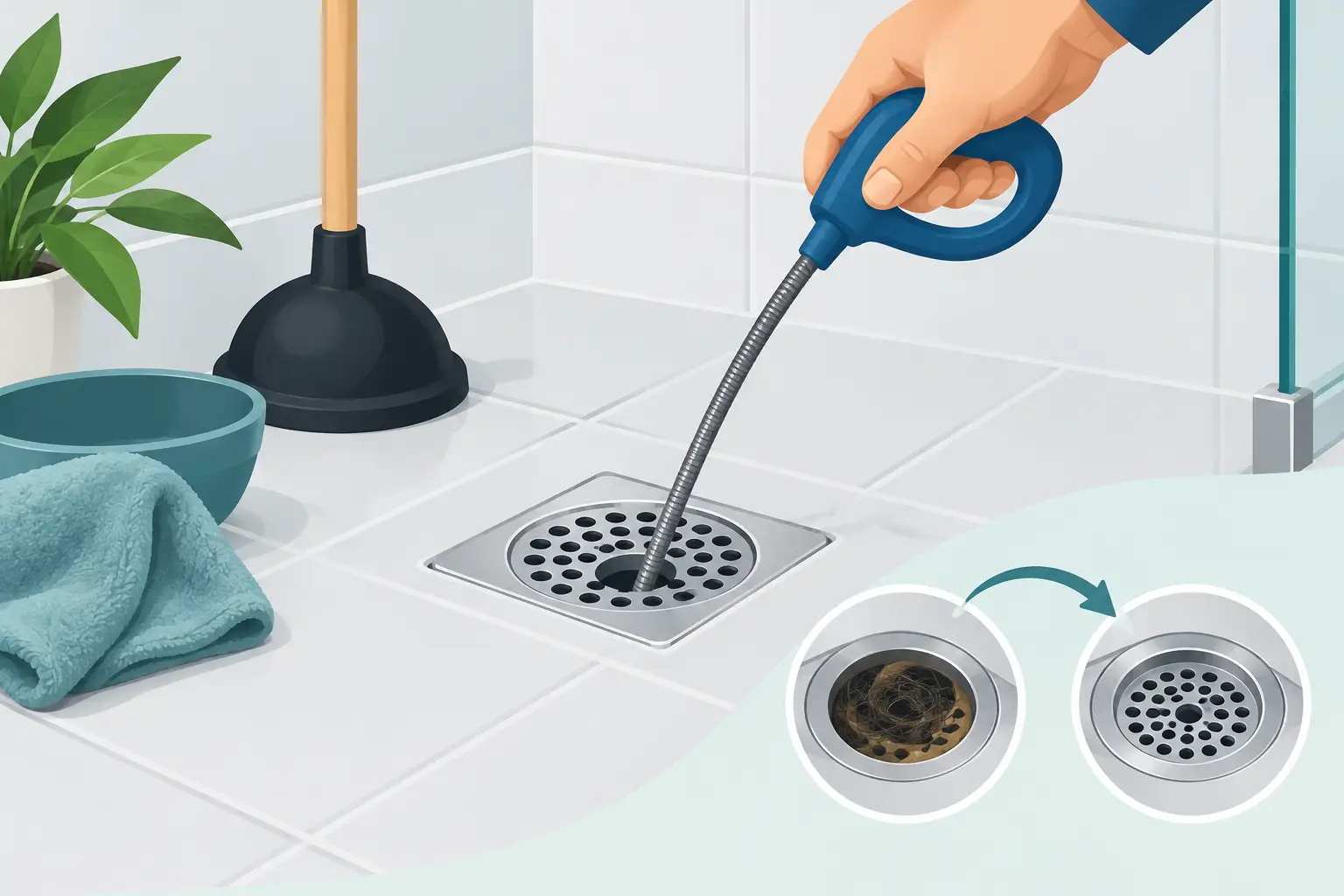
Use a flashlight to inspect just below the opening. You may see hair wrapped around the drain crossbar or packed near the top of the pipe. Pull it out slowly using gloved fingers, tweezers, or a plastic drain-cleaning tool. Avoid using a sharp metal object that could scratch the drain finish or damage components below the cover.
This step is often unpleasant, but it is also the most effective fix for a slow shower drain. Run water for a minute after clearing the debris. If drainage returns to normal, rinse the cover, reinstall it, and move on to preventive care.
Flush the drain with hot water
If the drain is still slow, use hot tap water to loosen soap residue. Pour it gradually into the drain rather than dumping a large amount at once. This gives the warm water time to work through the buildup.
Do not use boiling water if you have PVC pipework, acrylic shower trays, or are unsure about the materials in your bathroom. Very hot water can soften certain plastic fittings and may stress older seals. Hot tap water is the safer choice for most homes.
Use a plunger correctly
A small cup plunger can help break up a clog that sits a little farther down the pipe. Add enough water to cover the rubber cup. If your shower has an overflow opening, cover it with a wet cloth to create a better seal.
Position the plunger directly over the drain and make 10 to 15 firm, controlled strokes. The goal is to create pressure and suction, not to splash the bathroom. Check the water flow, then repeat once or twice if needed.
A plunger works best on a partial blockage. If the drain is completely full and nothing changes after a few attempts, stop rather than applying excessive force.
Use a drain snake or plastic hair remover
For clogs beyond reach, use a flexible plastic drain-cleaning strip or a small hand-operated drain snake. Feed it gently into the drain until you feel resistance, then rotate or move it slowly to catch hair and debris. Pull it back out carefully and clean the tool before repeating.
Do not force the snake aggressively. Shower drain assemblies can include tight bends, and excessive pressure can dislodge a fitting or compact the clog deeper into the line. If the tool will not pass easily or comes back clean while water still backs up, professional drain cleaning is the better next step.
Consider baking soda and vinegar for light residue
For minor soap buildup after you have removed hair, you can add about half a cup of baking soda followed by half a cup of white vinegar. Cover the drain for 15 to 20 minutes, then flush with hot tap water.
This method can freshen a drain and loosen light residue, but it is not a solution for a heavy hair clog or a deep obstruction. It should also never be mixed with chemical drain cleaners. Combining products can create dangerous fumes or splashes.
What Not to Put Down a Shower Drain
Strong chemical drain cleaners may appear convenient, but they are not always the safest first option. Their corrosive ingredients can damage older pipes, seals, and metal finishes. They can also remain trapped in standing water, creating a hazard for anyone who later removes the cover or works on the drain.
Avoid pushing coat hangers, screwdrivers, or rigid rods into the pipe. These can scratch the drain, puncture a component, or lodge inside the plumbing. Do not keep adding product after product when the first attempt fails. A stubborn blockage needs diagnosis, not more chemicals.
If you have already used a chemical cleaner, tell the plumber before any work begins. This allows the technician to handle the drain safely.
When a Shower Drain Needs Professional Attention
Some drainage issues are beyond a surface-level fix. Arrange professional plumbing service if the shower drain clogs repeatedly, water backs up into the shower when the sink or toilet is used, or multiple drains in the property are slow. These signs can point to a deeper blockage, venting issue, or drainage-line problem.
You should also call for help if you notice water staining on the ceiling below a bathroom, loose tiles, persistent dampness around the shower tray, or sewage odors. A blocked drain can sometimes expose an existing leak or failed seal. Treating only the water flow may leave the underlying problem unresolved.
For landlords, property managers, and busy households, a technician can inspect the drain line, clear the obstruction with suitable equipment, and check whether poor grout, worn silicone, or a plumbing defect is contributing to moisture damage. We Maintain Technical Services LLC provides practical plumbing support for homes and commercial properties across Dubai, helping customers address both urgent blockages and the maintenance issues behind them.
Keep Your Shower Drain Flowing Longer
A simple hair catcher is one of the best ways to prevent repeat clogs. Choose one that sits securely over or inside your drain without restricting normal water flow, and empty it after each shower or every few uses. It takes seconds and prevents hair from entering the pipe.
Clean the visible drain opening monthly, particularly in bathrooms used by families or residents with long hair. A regular hot-water flush can also help reduce soap residue, although it will not replace manual cleaning. Keep oils, thick body scrubs, and leftover renovation materials away from the drain, as these can harden or collect inside pipework.
In rental properties or regularly occupied villas, add bathroom drainage checks to routine maintenance. Early attention is less disruptive than dealing with a fully blocked shower before work, school, or guests arrive.
A clear shower drain should disappear into the background of daily life. If careful cleaning does not restore fast drainage, stop before a minor clog becomes water damage, and let a qualified technician identify the right repair.
Leave a Reply