
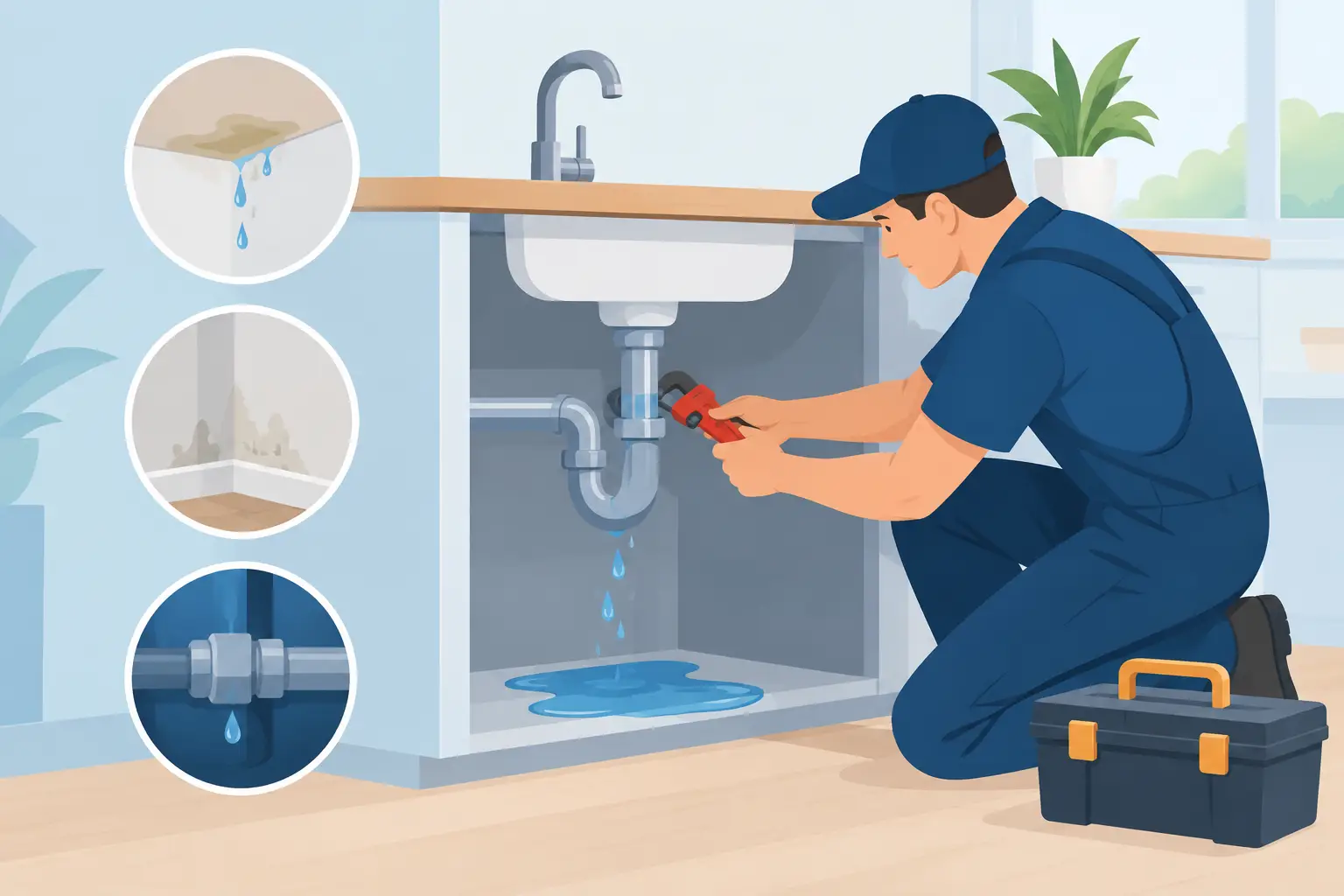
A small patch of dampness beneath a sink or a stain spreading across the ceiling can signal water leakage far beyond the visible area. In Dubai homes and offices, leaks can quickly affect paintwork, gypsum ceilings, flooring, cabinetry, electrical fittings, and indoor air quality. The right response is not simply to dry the surface. It is to find the source, stop the flow, and repair the damage before a minor issue becomes a disruptive property repair.
Why water leakage needs prompt attention
Water takes the easiest path, not always the most obvious one. A ceiling stain in a bathroom may come from a loose pipe connection, failed waterproofing around a shower, an AC condensate drain problem, or plumbing in the unit above. Likewise, water appearing near a wall may travel along a pipe or behind tiles before becoming visible several feet away.
This makes delay expensive. Continuous moisture can weaken plaster, cause paint to bubble, loosen tiles, swell wooden cabinets, and stain false ceilings. In apartments, an unresolved leak can also affect neighboring units and lead to difficult conversations with building management. In villas, hidden outdoor pipe faults or irrigation leaks can waste significant water while saturating landscaping or damaging external finishes.
There is also a health consideration. Damp areas that do not dry properly can encourage mold growth, particularly behind furniture, inside cabinets, and under flooring. The issue may start with a musty odor rather than a clear water mark. Addressing the source early protects both the property and the people using it.
Common signs of water leakage in homes and offices
Some leaks are obvious, such as water dripping from a pipe. Others need closer attention. A higher-than-usual water bill is often an early clue, especially when household usage has not changed. A water meter that continues to move after all fixtures and appliances are turned off may also suggest a concealed leak.
Look for paint that is blistering, peeling, or discolored; warped skirting boards; cracked grout; recurring puddles near toilets or water heaters; and soft or sagging sections of ceiling. A damp smell in a closed room, cabinet, or storage space deserves attention too. It may indicate moisture trapped where it cannot evaporate.
In Dubai, AC systems are another frequent source of confusion. Water around an indoor AC unit does not always mean a plumbing leak. It may result from a blocked condensate drain line, an incorrectly sloped drain pipe, a damaged drain pan, or poor insulation causing condensation. The repair approach differs, so accurate diagnosis matters before opening walls or replacing finishes.
Areas that deserve regular checks
Bathrooms and kitchens are the most common locations because they have multiple water connections, drains, and waterproofed surfaces. Check beneath sinks, around toilet bases, behind washing machines and dishwashers, and around shower screens. Pay attention to grout and silicone joints, as they help prevent water from entering the wall or floor structure.
Water heaters should be inspected for dripping valves, corrosion, loose connections, and water collecting below the unit. A small recurring drip can indicate excessive pressure, a failing relief valve, or a connection that needs proper sealing. Do not ignore it simply because the water is contained in a utility area.
For villas and commercial properties, inspect irrigation zones, external taps, pump rooms, water tanks, and rooftop pipework. Outdoor leaks are often missed because they disappear into soil or drains. Yet they can affect water consumption and create long-term moisture issues around foundations, paving, and walls.
What to do when you find a leak
Your first priority is limiting damage safely. If water is close to electrical outlets, light fittings, appliances, or a distribution board, keep clear of the area and switch off power only if it is safe to do so. Do not touch wet electrical equipment or attempt to remove a light fitting.
Next, stop the water supply if you can identify the correct isolation valve. Many fixtures have local valves beneath the sink or behind the toilet. For a larger leak, use the property’s main water shutoff valve. If you live in an apartment and the leak appears to be coming from above, document the visible damage with photographs and notify building management promptly.
Use towels or containers to control standing water, then move furniture, rugs, electronics, and stored items away from the affected area. This is damage control, not a repair. Avoid sealing over wet surfaces, repainting stains, or applying new silicone before the source is fixed and the area has dried fully. Those shortcuts can conceal the problem while moisture continues behind the finish.
Why professional leak detection saves time
A qualified technician starts by separating the symptom from the cause. That process may include checking visible plumbing connections, testing water pressure, inspecting drainage routes, reviewing waterproofing failures, and tracing moisture patterns. Depending on the property and suspected source, the inspection may also involve non-invasive moisture testing or targeted access to concealed pipework.
The goal is to avoid unnecessary demolition. Removing tiles or opening ceilings without evidence can add cost and inconvenience, especially in occupied homes and offices. On the other hand, a technician may recommend opening a small, controlled section when it is the most reliable way to inspect and repair a damaged pipe or fitting. The best option depends on the leak location, the condition of the surrounding materials, and how long the issue has been present.
A complete repair should address more than the active drip. For example, repairing a leaking shower mixer connection without restoring damaged waterproofing may lead to another failure later. Similarly, clearing an AC drain line without correcting an installation slope or insulation issue may only provide temporary relief. Reliable maintenance means resolving the underlying fault and checking the affected system as a whole.
Preventing future water leakage
Most leaks cannot be prevented forever, but routine maintenance lowers the chance of sudden damage. Replace worn silicone around showers, bathtubs, and sinks before gaps become visible pathways for water. Re-grout tiled areas when joints are cracked or missing, and avoid harsh cleaning methods that damage seals over time.
Keep AC drain lines and filters serviced, particularly before periods of heavy cooling use. A clean, well-maintained system is less likely to overflow indoors and is better able to manage condensation. Water heaters also benefit from periodic inspections, especially as valves, flexible hoses, and connections age.
For landlords, property managers, and business operators, planned maintenance offers a practical advantage. Regular inspections can identify minor plumbing, drainage, and AC concerns before they interrupt tenants or operations. An Annual Maintenance Contract can be especially useful for properties with several bathrooms, water heaters, or extensive cooling systems because one accountable team can coordinate repairs across trades.
In communities with villas, landscaped gardens, and outdoor amenities, include irrigation and exterior plumbing in the maintenance schedule. A concealed underground leak may not create an indoor emergency, but it can quietly increase bills and cause damage that is harder to correct later.
Choosing the right repair support
Choose a maintenance provider that can diagnose the fault before proposing a repair, explain what caused the issue in clear terms, and identify whether related work is needed. Water leakage can involve plumbing, drainage, AC, waterproofing, electrical safety, ceiling repair, painting, and cleaning. Coordinating separate contractors for each stage can slow down the process and make accountability unclear.
We Maintain Technical Services LLC provides integrated property maintenance support for homes and offices across Dubai, helping customers manage both urgent leaks and the repairs that follow. Whether the issue is a dripping connection, a hidden pipe fault, damaged bathroom sealing, or AC condensate overflow, a proper inspection helps protect the property without unnecessary disruption.
The most useful habit is simple: treat new moisture as a maintenance signal, not a cosmetic inconvenience. A quick inspection today can preserve finishes, prevent avoidable repair costs, and keep your home or workplace dry, safe, and comfortable.
Leave a Reply