
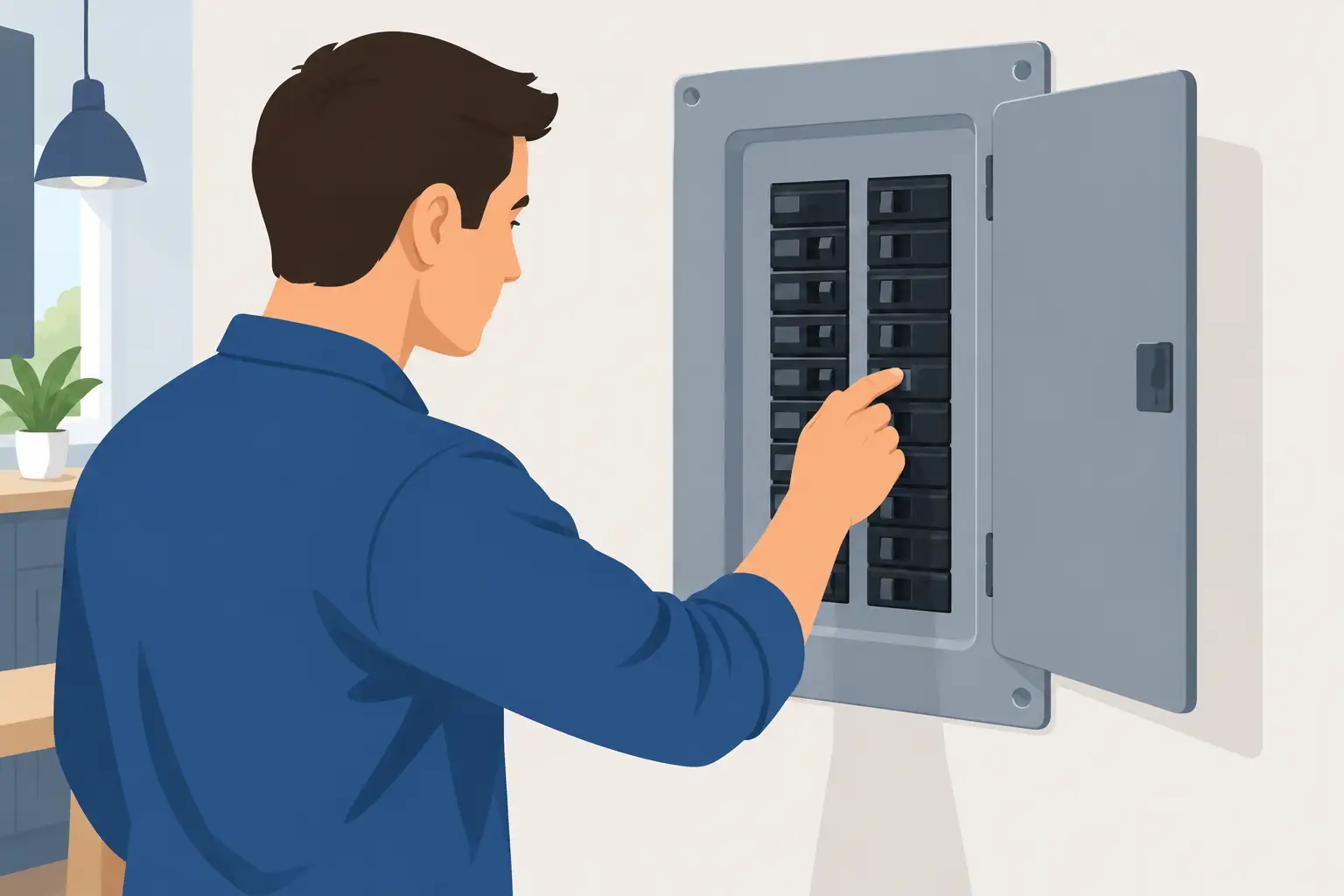
A sudden loss of power to one room is rarely a reason to panic. If the rest of your home or office still has electricity, a tripped breaker is often protecting the circuit from overload or a fault. Knowing how to reset circuit breakers safely can restore power quickly, but only when the cause is minor and there are no signs of electrical danger.
In Dubai properties, breakers may trip after several high-demand appliances run at once, following a power fluctuation, or because of an appliance with an internal fault. The key is not simply switching the breaker back on. It is checking the situation first, resetting it correctly, and recognizing when the circuit needs a qualified electrician.
What a circuit breaker does
Your electrical panel contains circuit breakers that control power to separate areas or equipment in the property. One breaker may serve bedroom outlets, another may supply kitchen sockets, while dedicated circuits may power an AC unit, water heater, oven, or washing machine.
A breaker trips when it detects an unsafe condition, such as too much current flowing through the circuit or a possible short circuit. By cutting power, it reduces the risk of overheated wiring, damaged equipment, and electrical fire. A tripped breaker is therefore a safety response, not an inconvenience to force past.
Before touching the panel, make sure your hands and the floor are completely dry. Never work around an electrical panel while standing in water, and keep children away from the area.
How to reset circuit breakers step by step
Start by identifying what lost power. If only one area, outlet group, or appliance is affected, the issue may be limited to a single circuit. If your entire property has lost electricity, check whether the outage affects neighboring units or common areas. That could indicate a building supply issue rather than a breaker inside your panel.
1. Turn off or unplug affected appliances
Switch off appliances and lights on the affected circuit before resetting the breaker. This reduces the load when power returns and can help you identify whether a particular item is causing the trip.
Pay particular attention to high-load equipment. Kettles, microwaves, portable heaters, hair dryers, irons, washing machines, dryers, and extension leads can overload a circuit when used together. In homes with multiple AC units, a fault in an AC isolator or connected equipment can also cause repeated tripping.
2. Find the tripped breaker
Open the electrical panel door and look for a breaker handle that is not fully in the ON position. Depending on the panel, it may sit in the middle position or appear switched to OFF. Panel labels can help, although labels in older or modified properties are not always accurate.
Do not remove the panel cover or touch wires, terminals, or metal components inside the panel. You only need access to the breaker switches themselves.
3. Move the breaker fully to OFF
A breaker that has tripped often will not reset if you simply push it toward ON. Firmly move the handle all the way to OFF first. You may feel a small click. This clears the tripped position and prepares the breaker to be reset.
4. Switch it back to ON
Move the handle decisively from OFF to ON. If it stays in the ON position, return to the affected area and test a light or outlet. Restore appliances one at a time rather than switching everything on at once.
If the breaker trips again immediately, leave it off. Do not repeatedly reset it. A breaker that will not stay on is signaling an active problem that needs diagnosis.
Why circuit breakers trip
The cause matters more than the reset. A one-time trip after several power-hungry appliances run together may be an overload. For example, using a kettle, microwave, and toaster from outlets on the same kitchen circuit can exceed its capacity.
Repeated trips are more concerning. They can point to a damaged appliance, loose wiring, water intrusion, a failing outlet, an overloaded extension lead, or an electrical issue inside fixed equipment. In Dubai, moisture around outdoor sockets, water heaters, and AC-related electrical components can create problems, especially after maintenance work or a leak.
A breaker may also trip after a power interruption or voltage fluctuation. If it resets once and remains stable with normal use, there may be no immediate fault. If the issue returns, it should not be treated as a routine nuisance.
When not to reset a breaker
There are situations where resetting a breaker can be unsafe. Leave the breaker off and arrange professional electrical support if you notice a burning smell, smoke, sparks, buzzing, scorch marks, melted plastic, or unusual heat around an outlet, appliance, or the electrical panel.
The same applies if a breaker trips the moment you reset it, trips repeatedly with little or no load connected, or is linked to a water leak. Never attempt to bypass a breaker, hold it in the ON position, replace it with a larger breaker, or use makeshift wiring repairs. These actions can turn a manageable electrical fault into a serious hazard.
If someone has received an electric shock, treat it as urgent. Do not touch them if they may still be in contact with a live source. Shut off power only if it is safe to do so, seek emergency help, and have the electrical installation inspected before it is used again.
How to narrow down the cause safely
If the breaker stays on after a reset, reconnect items gradually. Start with lights and low-power devices, then test appliances individually. When the breaker trips after one particular appliance is plugged in or switched on, stop using that appliance until it has been inspected or repaired.
If the breaker trips only when several devices operate together, reduce the load on that circuit. Spread appliances across different outlets and circuits where possible. Avoid relying on multi-plug adapters and extension leads for permanent high-load use, particularly in kitchens, laundry areas, and home offices.
Do not assume an outlet is safe just because it still supplies power. Warm outlets, loose plugs, flickering lights, or a recurring burning odor deserve prompt attention. Electrical faults can develop gradually, and a breaker may trip only after the condition worsens.
Special care for AC units, water heaters, and outdoor circuits
Some equipment deserves extra caution because it draws substantial power or operates near water. AC systems, water heaters, pumps, cookers, and outdoor circuits may have dedicated breakers or local isolator switches. A trip affecting one of these systems could be caused by the equipment itself, not simply an overloaded household circuit.
For example, resetting an AC breaker may temporarily restore cooling, but a repeated trip could relate to electrical connections, the compressor, a capacitor, or moisture in the system. Likewise, a water heater circuit that trips should be left off until a technician checks both the heater and its electrical supply. Water and electricity are never a do-it-yourself combination.
For villas, offices, and managed properties, clear circuit labeling is especially valuable. It helps occupants isolate a minor issue without guessing and allows technicians to work more efficiently during a repair. If labels are missing or confusing, ask an electrician to identify and label circuits as part of a planned maintenance visit.
When to call an electrician
Call a qualified electrician when a breaker repeatedly trips, an outlet or panel shows signs of heat damage, wiring may have been exposed to water, or a fixed appliance is involved. Professional diagnosis may include testing the circuit load, inspecting connections, checking insulation, and determining whether an appliance or the property wiring is at fault.
For tenants, report recurring electrical problems to the landlord or property manager rather than making modifications yourself. For landlords and facilities teams, a fast inspection protects occupants, limits downtime, and helps prevent a small fault from damaging appliances or disrupting operations.
We Maintain can support Dubai homes and businesses with dependable electrical troubleshooting, repairs, installations, and ongoing property maintenance. One accountable team makes it easier to handle an electrical issue alongside related needs such as AC, plumbing, or water-heater service.
A breaker that trips once may only need a careful reset. A breaker that keeps asking for attention deserves a proper answer: leave it off, keep the area safe, and have the cause checked before power is restored.
Leave a Reply