
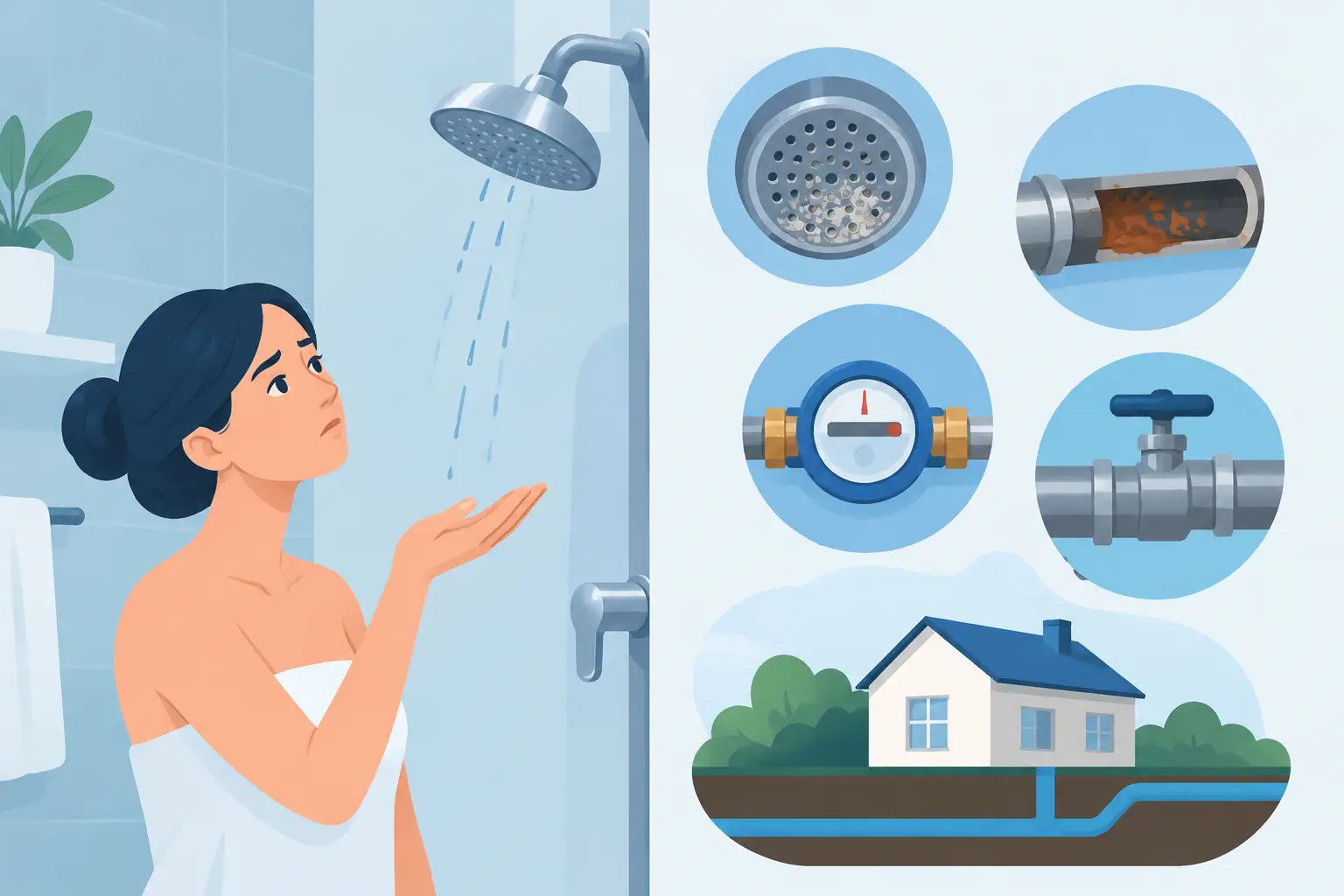
A shower that fades to a trickle halfway through, a kitchen faucet that takes too long to fill a pot, or an office restroom fixture with weak flow is more than a daily irritation. What causes low water pressure can range from a simple blocked aerator to a concealed leak, failing booster pump, or water tank issue that needs prompt professional attention. The pattern of the problem is the best place to start.
Low pressure at one faucet usually points to a local fixture issue. Low pressure throughout a villa, apartment, or commercial unit is more likely connected to the water supply, storage tank, pump, or main plumbing line. Understanding that difference helps avoid unnecessary repairs and gets the right solution in place sooner.
What Causes Low Water Pressure in a Property?
Water pressure is the force that moves water through pipes and out of your fixtures. When flow becomes weak, something is either restricting the route, reducing the available supply, or allowing water to escape before it reaches the tap.
In Dubai properties, pressure can also depend on a building’s water-storage arrangement, booster system, and the condition of its internal pipework. High-rise apartments and villas have different setups, so a reliable diagnosis should look beyond the visible faucet.
Clogged faucet aerators and showerheads
If one faucet has poor pressure while others work normally, check the aerator first. This small screen at the end of the faucet can trap sediment, mineral deposits, and debris. Showerheads can develop the same buildup, especially around individual spray holes.
Cleaning or replacing the affected part often restores flow quickly. However, repeated clogging may be a sign that sediment is entering the internal plumbing from a water tank or deteriorating pipework. Treating only the fixture in that situation gives temporary relief, not a lasting fix.
Partially closed valves
Every property has isolation valves that control water to individual fixtures, bathrooms, zones, or the full unit. A valve that is only partly open can noticeably reduce pressure downstream. This sometimes happens after a previous repair, installation, or emergency shutoff.
The main shutoff valve should be checked carefully, along with valves beneath sinks and behind toilets where accessible. Do not force old or corroded valves. A damaged valve can create a leak or leave a section of the property without water, turning a simple check into a larger plumbing job.
Hidden plumbing leaks
A leak does not always show up as a puddle. Water can escape inside a wall, beneath flooring, above a false ceiling, or in an outdoor line long before visible staining appears. As water is lost through the damaged section, the pressure available at taps and showers can drop.
Watch for unexplained increases in water consumption, damp patches, peeling paint, musty odors, warm areas on flooring, or a water meter that continues moving when all taps are off. A hidden leak should be investigated without delay. Beyond lower pressure, it can damage finishes, encourage mold growth, and affect neighboring units in an apartment building.
Aging, corroded, or scaled pipes
Older metal pipes can corrode internally over time. Scale and sediment gradually narrow the inside diameter, reducing the amount of water that can travel through the line. The result may be weak pressure at several fixtures, discolored water, or a problem that has become noticeably worse over months rather than overnight.
Pipe replacement is not always required across the entire property. A technician may find that one affected branch line is responsible. The right option depends on the pipe material, the location of the restriction, access for repairs, and the overall condition of the system.
Water tank problems
Many Dubai homes and buildings rely on stored water. If the tank level is low, the float valve is malfunctioning, sediment has collected, or the outlet is obstructed, the supply reaching the property can weaken. Poor tank hygiene can also affect water quality, making regular inspection and cleaning part of sensible property care.
A tank-related problem can look like a plumbing fault inside the home, particularly when pressure drops at multiple fixtures. Checking the tank, inlet components, outlet, and connected pump system provides a clearer answer than replacing faucets one by one.
Booster pump or pressure tank faults
Villas, upper-floor apartments, and commercial properties may use booster pumps to maintain consistent water pressure. A pump that is losing power, cycling too frequently, making unusual noise, or failing to activate can cause widespread low flow. A pressure vessel with an incorrect air charge or a damaged internal bladder can produce similar symptoms.
Pump repairs require more than switching the unit off and on again. Electrical connections, pressure settings, pipework, controls, and the source of the water supply all need assessment. Replacing a pump without identifying the root cause can lead to another failure and unnecessary cost.
A wider building or utility supply issue
Sometimes the issue is outside your unit. If several neighbors experience low pressure at the same time, the cause may be building maintenance, a shared pump issue, scheduled work, or a supply interruption. For tenants in managed buildings, reporting the timing and location of the problem to building management can help establish whether it is a common-system fault.
A wider supply issue does not rule out a local issue completely. One apartment may have a clogged filter or partly closed valve while the building is also experiencing lower-than-usual supply. This is why a methodical check matters.
How to Narrow Down the Cause of Low Water Pressure
Start by comparing fixtures. Run cold water, then hot water, at more than one faucet. If only hot water has weak flow, the issue may involve the water heater, its valves, or the hot-water line. If only one bathroom is affected, focus on that area’s fixtures and branch pipes.
Next, note when the problem occurs. Pressure that is weak only at certain times may be connected to pump cycling, tank levels, or shared demand in a building. Pressure that dropped suddenly after maintenance may point to a valve position, dislodged sediment, or a damaged component. A gradual decline is more commonly associated with buildup, corrosion, or a developing equipment fault.
Avoid using harsh chemicals to clear fixtures or pipes. These products can damage finishes, seals, and older plumbing materials, and they will not solve a pump, tank, or hidden leak problem. Likewise, do not adjust pump pressure settings without technical knowledge. Excessive pressure can strain connections and appliances, creating leaks elsewhere.
When to Call a Professional Plumber
Professional help is advisable when low pressure affects the whole property, returns after fixture cleaning, appears alongside dampness or unusual water bills, or involves a tank, pump, heater, or concealed pipe. These are the situations where accurate diagnosis protects the property as well as day-to-day comfort.
A qualified technician can test pressure, inspect valves and fixtures, assess pumps and tanks, and identify whether the fault sits within the unit or the wider building system. For homeowners, landlords, and business operators, this approach prevents the disruption of repeated trial-and-error repairs. We Maintain can coordinate the plumbing, tank, and related maintenance work needed to restore dependable water flow without the inconvenience of managing separate contractors.
Preventing Pressure Problems Before They Spread
A small amount of planned maintenance goes a long way. Keep faucet aerators and showerheads clean, arrange periodic water tank cleaning and inspection, and have pumps checked before they fail under demand. If your property has an older plumbing system, address minor leaks and recurring low-flow areas early rather than waiting for a full blockage or burst pipe.
For landlords and property managers, keeping a record of repairs, pump servicing, tank cleaning, and recurring tenant reports makes patterns easier to spot. An Annual Maintenance Contract can also turn scattered reactive calls into scheduled care for essential plumbing and water systems.
Weak water pressure is rarely something you need to simply live with. The sooner the source is identified, the easier it is to protect your water supply, finishes, equipment, and peace of mind.
Leave a Reply