
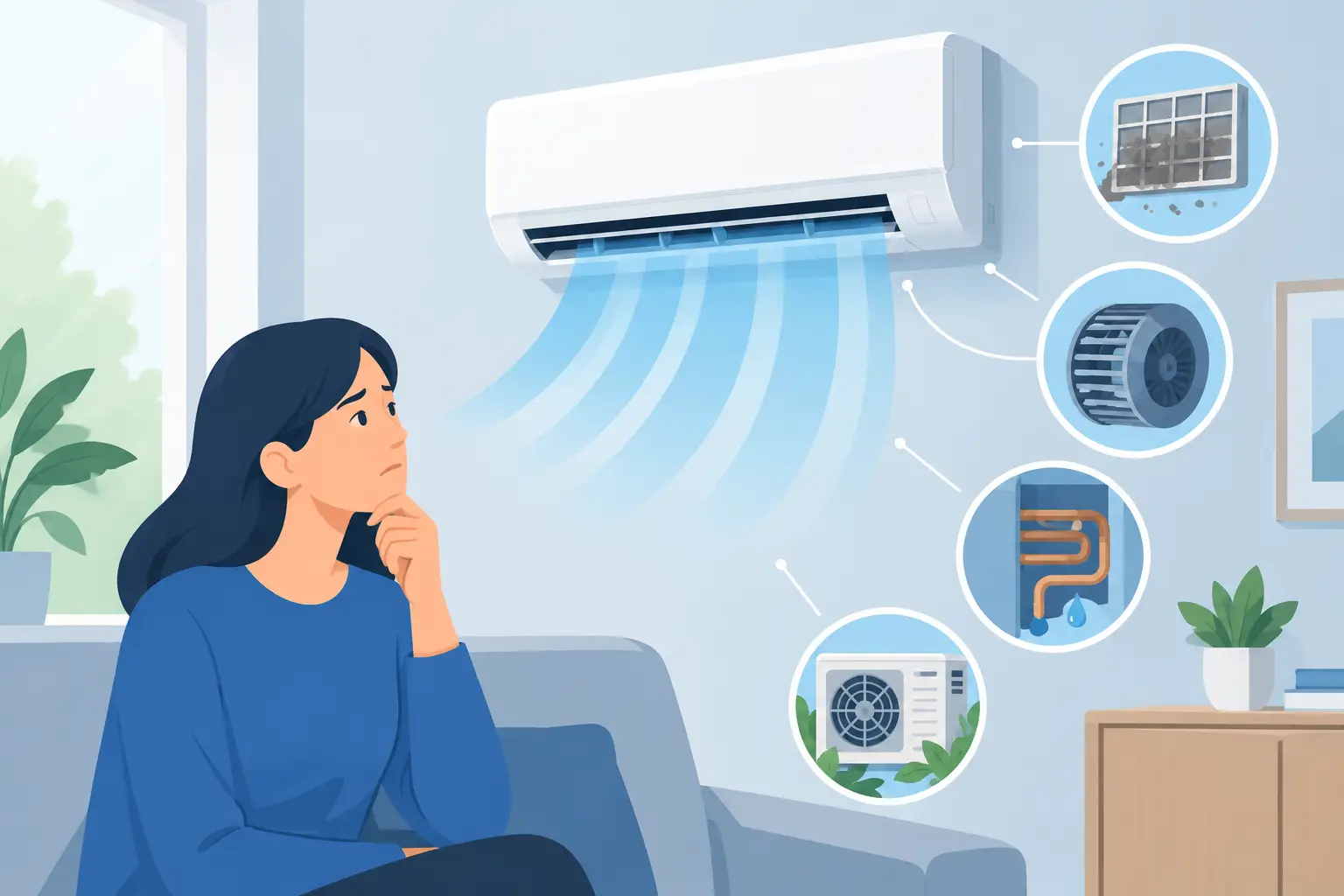
A bedroom that stays warm while the living room feels cold is more than an annoyance in Dubai. Uneven cooling, weak air from vents, and an AC that runs constantly are often early signs of AC airflow problems. Left unresolved, restricted airflow can raise energy use, reduce comfort, strain expensive equipment, and affect indoor air quality.
The good news is that not every airflow issue requires a major repair. Some causes are straightforward, such as a dirty filter or a blocked return grille. Others involve ductwork, fan components, or a frozen coil and need a qualified technician to diagnose safely. Knowing the difference helps you act quickly without guessing.
How AC airflow problems show up in your property
Airflow trouble does not always mean the AC has stopped cooling. In many Dubai homes and offices, the system still produces cool air, but not enough of it reaches the rooms that need it. You may notice a weak stream from one or more supply vents, rooms that take too long to cool, or large temperature differences between floors or areas of the property.
Other signs include a musty smell when the AC starts, louder-than-usual air movement, whistling near vents, and a system that seems to run all day. If the unit switches on but the air feels limited, do not keep lowering the thermostat. That can make the equipment run longer without solving the obstruction.
In villas, airflow concerns can be especially noticeable in upstairs bedrooms, extensions, maid’s rooms, or rooms with large sun-facing windows. In apartments and offices, one zone may feel uncomfortable because of restricted ducting, a closed damper, or poor circulation around the indoor unit.
The most common causes of weak AC airflow
A clogged air filter
The filter is the first place to check. It captures dust, sand, fibers, and other airborne particles before they enter the indoor AC equipment. In Dubai, filters can load up faster than many residents expect, particularly after dusty weather, renovation work, or periods when windows and balcony doors are frequently opened.
A blocked filter makes it harder for the system to pull air through. The blower must work harder, cooling output can drop, and the evaporator coil may eventually freeze. If your filter looks gray, visibly dusty, or bent out of shape, it should be cleaned or replaced according to the unit’s requirements. Reusable filters need proper washing and complete drying before reinstalling.
Closed or obstructed vents and return grilles
Supply vents deliver cooled air into the room. Return grilles pull room air back to the system to be cooled again. Both need clear space to work properly.
Furniture, curtains, storage boxes, and decorative covers can limit circulation, even when the vent itself appears open. A common issue is closing vents in unused rooms to save energy. In many systems, this can increase pressure in the ductwork and reduce airflow elsewhere. Unless your AC system has been designed and balanced for zoned operation, keep most vents open and use your thermostat settings to manage comfort.
Return grilles deserve equal attention. If a sofa, cabinet, or stacked items block the return, the AC cannot draw enough air through the system. Check that grilles are clean and have open space around them.
Dirty indoor coils or blower components
Even with a filter in place, fine dust can gradually collect on the evaporator coil and blower wheel. These parts are inside the indoor unit, where the coil removes heat from the air and the blower pushes conditioned air through the ducts.
Dirt on the coil reduces heat transfer. Buildup on the blower wheel can reduce the volume of air it moves. The result may be weak airflow, longer run times, water leakage, or ice forming on the coil. This is not a surface-cleaning job. It requires careful access, appropriate cleaning methods, and a check of the condensate drainage system afterward.
Duct leaks, damage, or disconnected sections
Ductwork carries cooled air from the indoor unit to each room. When ducts leak or have loose connections, some of that air is lost in ceiling voids or service areas instead of reaching the vent. Crushed flexible ducts, poorly sealed joints, and damaged insulation can also affect performance.
This issue often causes uneven cooling rather than weak airflow everywhere. One room may receive plenty of air while another remains warm, especially if the affected duct run is long or has several bends. Duct inspection and sealing can improve comfort, but the right repair depends on the condition and layout of the system. Adding more cooling capacity without correcting leaking ducts can waste money.
A frozen evaporator coil
Ice on the indoor coil blocks the passage of air, so airflow may start out normal and then become weaker over time. A clogged filter is one possible trigger, but low refrigerant, dirty coils, blower faults, and thermostat or control issues can also contribute.
If you suspect a frozen coil, switch the cooling mode off and set the fan to run only if your system allows it and air is still moving. This may help the ice thaw. Do not chip at ice or pour hot water into the unit. If the problem returns after thawing and filter cleaning, arrange a professional inspection. Repeated freezing can damage the compressor and create water leakage when the ice melts.
Fan motor, capacitor, or control faults
The indoor fan has to run at the correct speed to maintain proper airflow. A failing motor, weak capacitor, damaged belt in some commercial systems, or control-board issue may cause the blower to run slowly, intermittently, or not at all.
You may hear humming, rattling, or unusual starts and stops. Because AC equipment contains electrical components and moving parts, this is not a safe area for trial-and-error repairs. A technician can test the motor performance, capacitor condition, wiring, and control settings to identify the actual fault.
Simple checks you can make before booking service
Start with the thermostat. Make sure it is set to cooling mode, the temperature is lower than the current room temperature, and the fan setting is correct for your preference. In many properties, the fan should remain on Auto so it does not run continuously when cooling is not needed.
Then inspect accessible filters, supply vents, and return grilles. Remove obstacles, make sure vents are open, and clean visible dust from grille surfaces. If you have recently changed furniture, installed curtains, completed painting, or had construction work nearby, these changes may explain why the issue appeared suddenly.
It also helps to compare rooms at the same time of day. Take note of which vents have weak airflow, whether the outdoor unit is operating, and whether you see water around the indoor unit. These details give a maintenance team a clearer starting point and can shorten the diagnosis.
Avoid opening electrical panels, removing sealed AC covers, handling refrigerant lines, or trying to force dampers inside ducts. A small mistake can turn a manageable airflow issue into an electrical, drainage, or cooling-system repair.
When professional AC maintenance is the better choice
Book an inspection when filter cleaning and clear vents do not improve the problem, when airflow is weak in only part of the property, or when you notice ice, water leaks, burning smells, or unusual noises. These signs point to faults that need more than routine cleaning.
A proper AC airflow assessment should look beyond the visible vent. The technician may inspect filter condition, coil cleanliness, blower operation, drainage, duct connections, insulation, air distribution, and thermostat controls. For offices and managed properties, balancing comfort across rooms can be as important as restoring total cooling capacity.
Regular preventive maintenance is usually less disruptive and less costly than waiting for a complete breakdown during the hottest months. This is particularly valuable for villas, rental properties, and businesses where an AC failure affects several occupants. A structured maintenance plan can also combine AC care with duct cleaning, plumbing, electrical, and general property checks under one accountable service partner.
For homeowners and businesses that want dependable support, We Maintain can inspect airflow concerns, complete the required AC maintenance, and address related duct or drainage issues without the inconvenience of coordinating multiple contractors.
Keep air moving before the heat exposes the problem
Clean filters on schedule, keep returns and vents clear, and pay attention when one room starts cooling differently from the rest. A small change in airflow is often the earliest warning that your AC needs care. Addressing it promptly helps protect comfort, equipment life, and the people relying on your property to stay cool.
Leave a Reply