
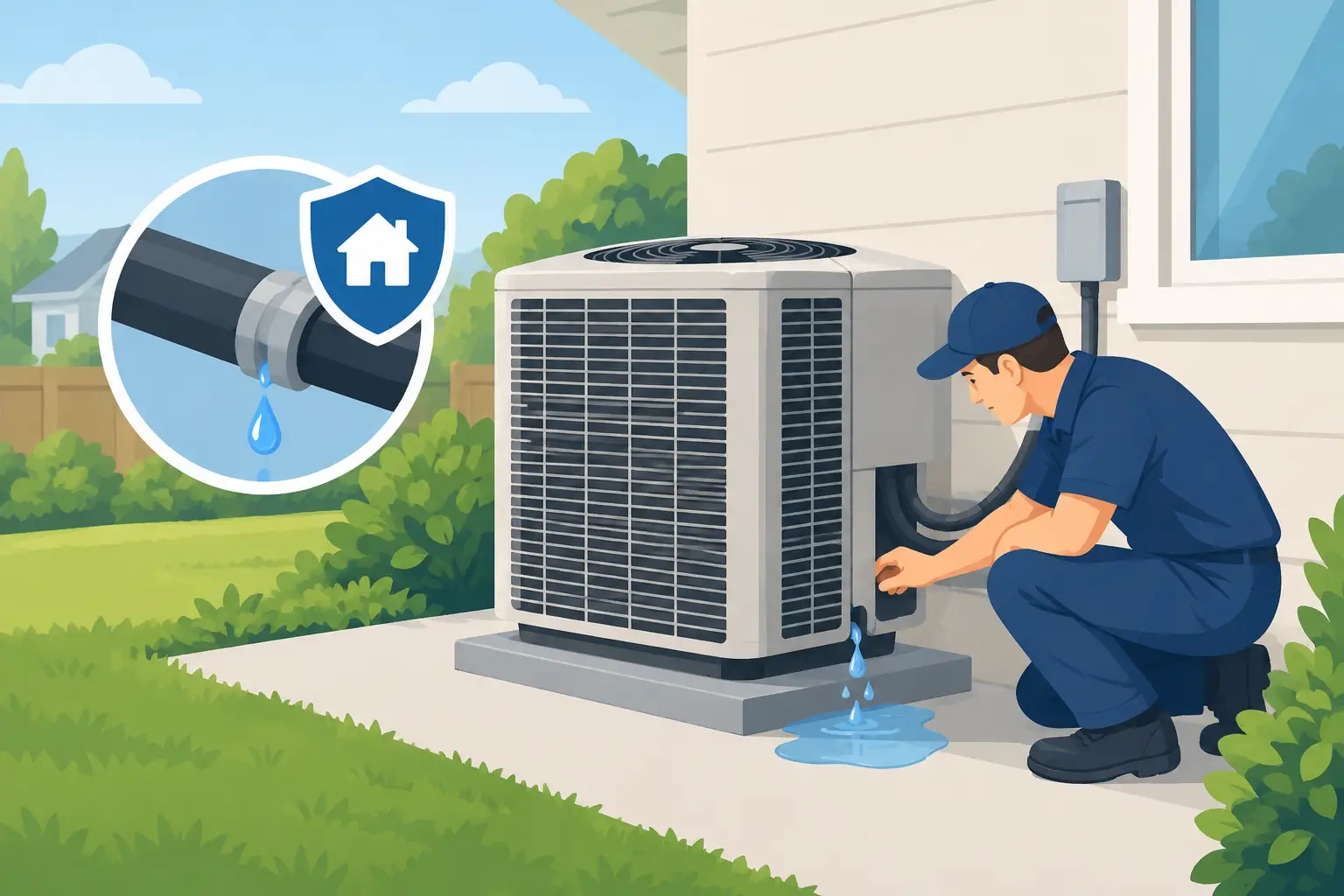
A puddle beneath an indoor AC unit is never just an inconvenience in Dubai’s heat. Water can stain ceilings, damage gypsum board, affect flooring, and create damp conditions around electrical fittings. Knowing how to stop AC leaks starts with recognizing that the water is usually a drainage or airflow problem, not something to ignore until the next service visit.
Why Your AC Is Leaking Water
Your air conditioner removes moisture from the air as it cools. That moisture collects on the evaporator coil and should flow through a condensate tray, drain line, and outlet. When any part of this path is blocked, damaged, or overwhelmed, water may escape from the indoor unit.
A clogged condensate drain line is one of the most common causes. Dust, algae, sludge, and airborne debris can build up inside the pipe, especially when an AC runs for long periods. The water then backs up into the drain pan and overflows through the unit or ceiling void.
A dirty air filter can also lead to leaks. Restricted airflow may cause the evaporator coil to become too cold and freeze. When the ice melts, the resulting volume of water can exceed what the tray and drain line can handle. In apartments and villas where AC systems operate almost constantly during summer, this is a frequent and preventable issue.
Other possible causes include a cracked drain pan, a disconnected drain pipe, an incorrectly sloped drain line, or a faulty condensate pump. Low refrigerant can freeze the coil as well, but this is not a DIY diagnosis. Refrigerant work requires a qualified AC technician who can find and repair the underlying leak, rather than simply adding gas.
How to Stop AC Leaks Safely
Start by protecting the area around the leak. Turn the AC off at the thermostat or controller. If water is close to sockets, light fixtures, extension leads, or the electrical panel, switch off power to the affected unit from the breaker only if it is safe to do so. Move furniture, rugs, and valuables away from the water, then place towels or a container below the drip point.
Next, check the air filter. If it is visibly gray, dusty, or blocked, remove it according to the unit instructions and clean or replace it. A clean filter helps restore airflow, reduces strain on the system, and lowers the chance of coil freezing. Let a washable filter dry completely before reinstalling it.
If you can safely access the visible condensate drain outlet, look for obvious signs of blockage. A slow trickle, dirty water, or no drainage while the system is cooling can point to a clogged line. Do not force wires, sharp objects, or high-pressure water into the pipe. This can damage joints, dislodge the line, or push debris deeper into the system.
For a minor blockage, a technician may clear the drain using appropriate suction equipment and flush the line to remove buildup. They should also inspect the drain tray and test water flow before leaving. This matters because a line that appears clear at one point may still have a partial blockage farther along.
Avoid running the AC again until you know where the water is coming from. Restarting a leaking unit can make ceiling damage worse and may allow moisture to spread into walls, insulation, or false-ceiling spaces. If the leak is substantial, recurring, or coming through a ceiling, arrange professional support promptly.
Signs the Leak Needs Professional Repair
Some AC leaks cannot be solved by cleaning a filter or clearing an accessible drain outlet. Call for AC maintenance if the problem returns after basic cleaning, the unit makes unusual noises, cooling has become weak, or ice is visible on the refrigerant pipes or indoor coil.
Water dripping from a ceiling is especially urgent. The source may be a concealed fan coil unit, a broken drain connection, or a blocked shared drainage route. The visible drip is not always directly below the actual fault, so a proper inspection is needed before repairing the ceiling finish.
A technician should also investigate musty odors, dark spots around vents, or repeated moisture near the indoor unit. These can indicate standing water in the drain pan or hidden dampness. Addressing the source early helps protect indoor air quality as well as the property itself.
In a home or office with several AC units, it is worth checking whether the issue is isolated or part of a wider maintenance gap. Multiple blocked drains, heavily soiled filters, or inconsistent cooling often mean the system needs a more thorough service rather than a single quick fix.
Preventing Future AC Leaks
The most reliable way to prevent leaks is scheduled AC maintenance before the hottest months and regular checks while the system is in heavy use. Cleaning filters every few weeks is a sensible starting point, although frequency depends on occupancy, pets, nearby construction dust, and how often the unit operates.
Professional maintenance should cover more than a filter rinse. A complete visit can include cleaning the evaporator coil, drain tray, drain line, blower components, and outdoor condenser, along with checking insulation, electrical connections, refrigerant performance, and drainage slope. Each task supports efficient cooling and reduces the conditions that cause water to overflow.
Keep supply and return vents clear of furniture, curtains, and stored items. Poor airflow makes the system work harder and can contribute to coil icing. It is also wise to pay attention after periods of low use. When an AC is switched back on after travel or a cooler season, a partially blocked drain may only become obvious once condensation starts building up again.
For landlords, property managers, and business operators, planned maintenance is often more cost-effective than repeated emergency callouts. An Annual Maintenance Contract can organize routine inspections across multiple units and make it easier to catch small drainage faults before they become ceiling repairs, tenant complaints, or business disruption.
Common Questions About AC Water Leaks
Can I use the AC while it is leaking?
It depends on the source and severity, but switching it off is usually the safer choice. A small amount of condensation at an exterior drain outlet is normal. Water dripping inside the room, through a ceiling, or near electrical components is not. Continuing to run the unit can increase property damage.
Is a leaking AC dangerous?
The water itself is not always dangerous, but its location can make the situation risky. Moisture near electrical wiring, outlets, lights, or equipment needs prompt attention. Standing water can also encourage mold growth and damage finishes if left untreated.
Does low refrigerant cause an AC to leak water?
It can contribute indirectly. Low refrigerant may cause the evaporator coil to freeze, and the melting ice can create excess water. However, refrigerant levels should only be assessed by a trained professional, as the system may have a refrigerant leak that needs repair.
A leaking AC is a problem best handled early, while it is still a drain cleaning or minor repair rather than damaged ceilings and disrupted cooling. For dependable inspection, repair, and ongoing AC care across Dubai homes and offices, We Maintain can help keep every part of the system working as it should.
Leave a Reply