
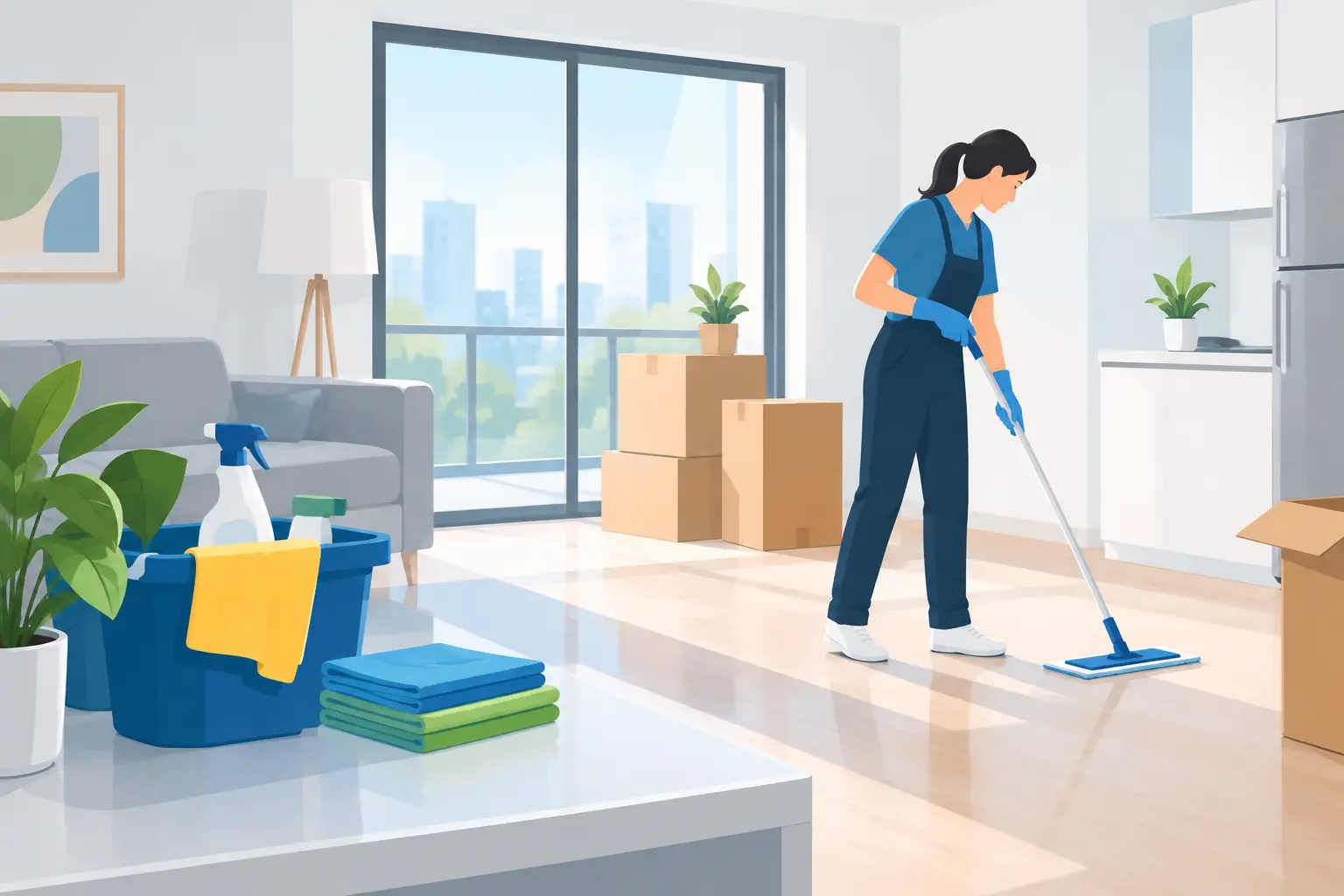
The final week of a tenancy can get expensive quickly. A forgotten grease mark behind the stove, dust inside AC vents, or a small wall hole left unrepaired can delay handover discussions and put part of your security deposit at risk. Proper apartment move out cleaning is more than a fast wipe-down before returning the keys. It is a planned process that brings the apartment back to a clean, well-maintained condition and makes the handover easier for both tenant and landlord.
Apartment Move Out Cleaning Starts Before Cleaning Day
The best move-out clean begins with an honest walk-through while your furniture is still in place. Review your tenancy agreement and any move-in inventory or photos you received. These documents help establish what was already worn, damaged, or missing when you moved in, so you can focus on issues that are your responsibility.
Pay close attention to clauses related to professional cleaning, repainting, pest control, utility bills, access cards, and keys. Requirements vary by building and landlord. Some properties expect a deep clean, while others may also require specific maintenance work before the final inspection. If anything is unclear, ask for the handover expectations in writing rather than making assumptions on the day you leave.
Schedule cleaning after most furniture and boxes have been removed. Empty rooms reveal the areas that daily cleaning misses: skirting boards, corners, cabinet interiors, behind appliances, and under beds. Keep enough time between the cleaning appointment and key handover to handle a small repair or a missed area without pressure.
Separate normal wear from repair needs
A clean apartment does not automatically resolve maintenance issues. Normal wear, such as minor fading or aging sealant, may be expected over a tenancy. However, cracked tiles, broken cabinet hinges, damaged sanitary ware, drilled wall holes, stained grout, and loose fittings can require repair.
Address these items before the final clean whenever possible. Cleaning around a leaking faucet or a damaged drain cover only creates more work later. For apartments with several issues, it is usually more efficient to coordinate repairs, painting touch-ups, and cleaning through one accountable maintenance team instead of arranging different contractors at the last minute.
Clean Room by Room, Not Surface by Surface
Move-out cleaning works best when each room is completed from top to bottom. Start with high areas, such as vents, shelves, and light fixtures, then work down to countertops, cabinets, walls, and floors. This prevents dust from settling on surfaces you have already cleaned.
Kitchen: the inspection hotspot
Kitchens often need the most detailed work because grease and food residue build up gradually. Empty every cabinet and drawer, remove crumbs and shelf liners, and wipe the interior as well as the handles and outer panels. Check beneath the sink for moisture, stains, or signs of a slow leak.
The oven, cooktop, hood filter, microwave, refrigerator, and dishwasher deserve extra attention. A hood filter that looks clean from a distance may still hold sticky grease, while the refrigerator can retain odors even after food has been removed. Pull movable appliances forward only if it is safe to do so, then clean the floor and wall area behind them.
Do not use abrasive products on delicate countertops, stainless steel, glass cooktops, or painted cabinets. A harsh cleaner may remove a stain but leave a more noticeable dull patch or scratch behind.
Bathrooms: focus on buildup and hygiene
Hard-water marks, soap residue, mold around silicone, and stained grout are common handover concerns. Clean the shower glass, shower tracks, faucets, drain covers, toilet base, basin, mirrors, and storage cabinets. Look closely at the edges of the bathtub or shower enclosure, where discoloration can be difficult to notice until the room is empty.
If mold has returned because of poor ventilation, a leaking fixture, or failed silicone, cleaning alone may not hold up. The underlying issue should be repaired before handover. This is especially relevant in Dubai apartments, where a bathroom exhaust problem can contribute to persistent moisture and odor.
Bedrooms and living areas: remove evidence of everyday life
Vacuum carpets and upholstery thoroughly, including edges and beneath furniture. For tiled or hard floors, vacuum first so dust and grit do not spread during mopping. Wipe built-in wardrobes inside and out, clean window tracks, and remove adhesive hooks, tape, and temporary wall fixtures carefully.
Inspect walls in daylight. Small scuffs may lift with a gentle cleaner, but deep marks, unauthorized paint colors, and holes from mounts or shelves often need filling and touch-up painting. Match paint carefully if the building requires a specific finish. A visible patch can be just as noticeable as the original damage.
Do Not Forget AC, Balconies, and Hidden Areas
In Dubai, air conditioning is not a minor detail. Replace or clean accessible filters only where appropriate for the system, and clear dust from reachable grilles without pushing debris into the unit. If there is weak cooling, water dripping, unusual noise, or a stale smell, arrange AC maintenance rather than trying to cover the problem with air freshener. A clean-looking apartment should also feel comfortable when the inspection takes place.
Balconies need attention too. Remove pots, outdoor furniture, debris, and dust, then clean drains without forcing dirt into them. Do not pressure-wash a balcony unless building rules allow it, as water can affect neighboring units or drainage systems. Wipe exterior-facing glass from the inside if access and building policy permit.
Finish with the places inspectors commonly check because tenants overlook them: behind doors, inside utility closets, around switches, on curtain rails, above cabinets, and along skirting boards. These small areas make a strong difference because they show whether the apartment received a true deep clean or only a quick refresh.
A Practical Handover Check Before You Leave
Once the apartment is clean and dry, conduct a final walk-through with your phone camera and the original inventory in hand. Take clear, date-stamped photos and short videos of each room, including appliances, bathrooms, walls, meter readings, and any agreed pre-existing damage. Keep copies of repair and cleaning invoices as well.
Before leaving, confirm that you have completed these final checks:
- All personal belongings, trash, and cleaning products have been removed.
- Lights, faucets, toilets, drains, sockets, and appliances have been tested where accessible.
- Keys, access cards, parking remotes, and mailbox keys are accounted for.
- Utilities, internet equipment, and building move-out procedures have been handled as required.
- The apartment has been photographed after cleaning and before handover.
This record is useful if questions arise later about the apartment’s condition. It also helps the handover appointment move faster, particularly in larger managed communities where inspection schedules can be tight.
When Professional Help Is Worth It
A tenant can handle a straightforward apartment clean when the property is small, well maintained, and there are no repair concerns. Professional support becomes more valuable when the apartment has heavy kitchen grease, stained grout, carpet odors, AC concerns, paint damage, or multiple jobs that need coordinating before a deadline.
The benefit is not simply cleaner surfaces. A qualified team can identify maintenance problems that cleaning will not solve, complete repairs before the final pass, and reduce the inconvenience of booking separate cleaners, painters, plumbers, and AC technicians. For tenants, landlords, and property managers, that single point of responsibility can make a demanding move far more manageable. We Maintain can coordinate cleaning and the related technical work when a property needs both.
Treat the handover as the last act of good property care, not a rushed chore after the moving truck leaves. Give the apartment enough time, address problems honestly, and leave it in a condition you would be comfortable moving into yourself.
Leave a Reply