
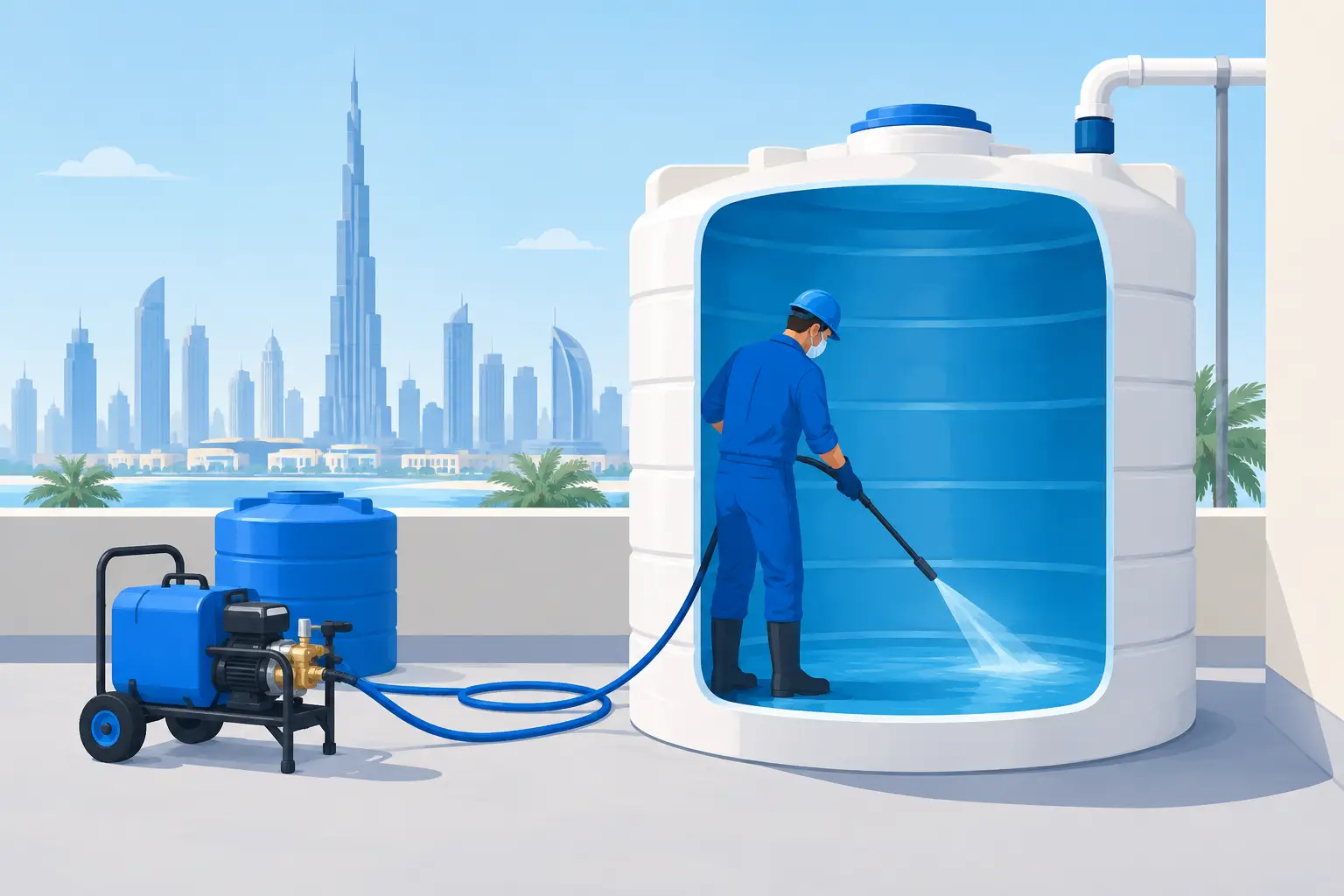
A water tank is easy to forget because it is usually out of sight – on a roof, in a utility area, or beneath the property. Yet it stores the water your family, tenants, staff, and guests depend on every day. In Dubai, heat, dust, sediment, and regular use can affect tank hygiene over time. Booking a professional water tank cleaning service Dubai property owners can rely on is a practical part of maintaining a healthy home or workplace.
For villas, apartments, offices, restaurants, and managed buildings, tank cleaning is not simply a surface wash. It is a controlled maintenance task that requires proper isolation, drainage, cleaning, disinfection, inspection, and safe restoration of the water supply. A dependable team helps you handle the process with minimal disruption while identifying visible issues before they turn into larger plumbing concerns.
Why Water Tank Cleaning Matters in Dubai
Dubai’s climate places extra demands on building systems. Fine airborne dust can find its way into poorly protected tanks or openings. Mineral sediment may settle at the bottom over time. When a tank has not been cleaned regularly, biofilm, residue, or debris can accumulate on internal surfaces.
That does not mean every tank will have the same condition or need the same level of work. A well-sealed tank in a carefully managed building may remain cleaner than an exposed tank with damaged covers, aging pipework, or irregular maintenance. Still, waiting until water looks unusual or develops an odor is not a sensible maintenance strategy. By that point, the issue may already require more than routine cleaning.
Regular service supports better water hygiene and gives a technician the opportunity to check the tank’s basic condition. Loose lids, cracked fittings, worn insulation, leaks around connections, and problems with float valves are all easier to address when found early. For property managers and landlords, this can also reduce unexpected complaints and urgent callouts.
What a Professional Water Tank Cleaning Service in Dubai Includes
A qualified service should follow a clear, methodical process rather than arriving with a hose and leaving quickly. The exact approach depends on tank type, size, access, the condition of the system, and whether the property has one tank or several. Most professional visits include the following stages.
1. Inspection and preparation
The technician begins by assessing access, tank material, visible contamination, inlet and outlet connections, and the safest way to carry out the work. Water supply arrangements should be discussed before cleaning begins, especially in occupied villas, apartment buildings, offices, and commercial premises.
The team will isolate the tank as required and make sure the work area is protected. Proper preparation matters because it helps prevent cross-contamination and avoids avoidable disruption to occupants.
2. Draining and removal of settled debris
Once the tank is isolated, the stored water is drained in a controlled way. Sediment often settles at the base, where it may not be visible during normal use. Removing this material is one of the key reasons professional cleaning is more effective than trying to rinse a tank without access to its internal surfaces.
A technician should take care around pumps, valves, and connected plumbing. Older properties or tanks with limited access may need additional attention, which is why a site assessment and transparent quote are useful before work starts.
3. Internal cleaning and disinfection
The tank’s walls, floor, corners, and accessible fittings are cleaned to remove residue and buildup. A suitable disinfection process is then used to treat internal surfaces. The tank is rinsed as needed so it can be safely returned to service.
The right materials and procedures matter. Harsh or unsuitable chemicals can damage certain tank surfaces, while incomplete rinsing can leave behind unwanted residues. This is not a job to hand to an untrained cleaner or treat as a quick DIY task.
4. Refilling and final checks
After cleaning, the tank is refilled and the system is checked for normal operation. This can include confirming that covers are secure, water flow is restored, and connections appear sound. If a technician notices an issue outside the cleaning scope, such as a leaking pipe, faulty float valve, or damaged access cover, they should explain what was found and recommend the next practical step.
That is one advantage of using a maintenance provider with plumbing and general technical capability. You do not have to coordinate separate contractors for every issue that appears during the visit.
Signs Your Tank May Need Attention Sooner
Routine cleaning should be scheduled before a problem becomes obvious, but certain signs deserve prompt action. Changes in water appearance, a musty smell, recurring sediment in fixtures, or an unexplained reduction in water flow should not be ignored. These symptoms can have different causes, and a tank is only one part of the overall water system, but it is a sensible place to inspect.
You may also need earlier service after construction work nearby, a long period of vacancy, plumbing repairs, pest activity around the tank area, or damage to a lid or cover. In communities where villas have roof-mounted tanks, windblown dust and weather exposure make secure covers and periodic inspections particularly worthwhile.
For commercial properties, cleaning needs may depend on occupancy, water demand, the building’s maintenance records, and any internal hygiene requirements. A busy office, retail site, or accommodation facility may need a more structured schedule than a lightly used residential property.
How Often Should You Clean a Water Tank?
There is no universal timetable that suits every property. The ideal frequency depends on the tank’s condition, location, material, capacity, water use, and how well the tank is sealed and maintained. Many homeowners choose periodic professional cleaning as part of their annual property-care plan, while landlords and facility managers may work to a more formal schedule based on their building requirements.
The most useful approach is preventive rather than reactive. A technician who has serviced the tank before can help you assess whether the interval is appropriate or whether your property needs closer monitoring. If cleaning repeatedly reveals heavy debris or recurring contamination, the answer may be more than cleaning more often. The tank cover, surrounding area, pipe connections, or water storage setup may need repair or improvement.
Choosing the Right Provider
Price matters, but it should not be the only deciding factor when the service affects water stored for daily use. Look for a provider that can explain the work clearly, inspect the system before making assumptions, and give straightforward advice if repairs are needed.
Ask whether the scope includes drainage, internal cleaning, disinfection, rinsing, and refilling checks. Confirm whether there are access limitations, additional charges, or expected water interruptions. A reputable provider will communicate these points upfront rather than leaving you uncertain about what the service covers.
It also helps to choose a team that understands the wider maintenance picture. A water tank can be connected to pumps, plumbing fixtures, water heaters, filters, and building controls. When one accountable company can manage related technical work, it simplifies the process for busy homeowners, tenants, landlords, and office administrators.
WeMaintain Technical Services LLC provides water tank cleaning alongside plumbing, water heater, electrical, AC, deep cleaning, and general property maintenance services. For customers managing villas, apartments, offices, or multiple units, this means one dependable team can address routine cleaning and the surrounding maintenance needs without the hassle of coordinating several providers.
Prepare Your Property for the Visit
A little preparation can make the appointment easier. Ensure the technician can access the tank area, remove personal items around utility spaces, and let tenants or staff know if there may be a short interruption to water service. If you have noticed a leak, unusual pump noise, low pressure, or a damaged cover, mention it when booking so the team can arrive prepared.
For landlords and property managers, keeping a simple record of cleaning dates, observations, and repairs helps create a clearer maintenance history. This is especially useful when properties change hands, tenants move in, or multiple units are managed under one maintenance plan.
Clean water storage should never be a last-minute concern. A scheduled inspection and professional cleaning visit gives you a clearer view of the system behind your taps and helps keep your property cared for with less disruption when it matters most.
Leave a Reply